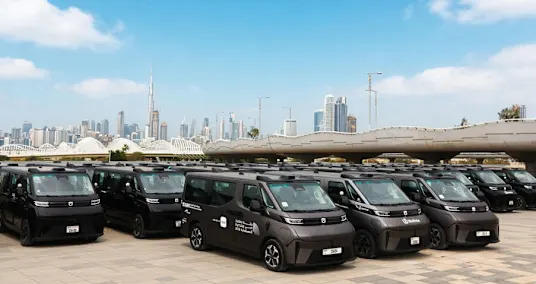
The dream of driverless taxis continues in the Gulf, where the conflict with Iran has slowed but not stopped progress on autonomous transport in Abu Dhabi, Dubai, and Riyadh.
Uber and WeRide added another driverless route in Saudi’s capital this week, linking shopping centers Hayat Mall and Riyadh Gallery. The expanded service comes after the vehicles completed more than 1,700 trips in a trial phase, according to the regulator.
Uber and WeRide have also launched fully driverless services in Dubai, beginning in popular residential and commercial areas Jumeirah and Umm Suqeim, with no safety monitor on board. Separately, Dubai Taxi Company plans to deploy more than 1,000 driverless cars in the city with Baidu’s Apollo Go, starting with a fleet of 50 this year. Earlier this month, Autogo, part of Abu Dhabi-backed technology company K2, began offering rides on Yas Island, and it plans to expand to Saadiyat and Al Maryah islands.
All this is bad news for the region’s taxi drivers, a largely South Asian group whose business is already down due to the conflict with Iran.
latest_posts
- 1
 Opening Your True capacity: 12 Techniques for Personal growth
 - 2I’m a dad to an autistic child. Here’s how you can make the holidays easier for all of us.
- 3Limited Rain Chances in Brazil Boost Coffee Prices
- 4Story of ‘first Black Briton’ rewritten by advances in ancient DNA technology
- 5Telescope in Chile captures stunning new picture of a cosmic butterfly


- Investigating Remarkable Espresso Flavors: Upgrade Your Day to day Blend
- Why some African countries are prone to military takeovers
- The Most Astonishing Arising Advances to Watch
- 5 Most Expected Film Delivery
- 10 Demonstrated Systems to Develop Your Internet based Business
- Watch live as near-Earth asteroid Eros buzzes the Andromeda Galaxy on Nov. 30 (video)
- As tetanus vaccination rates decline, doctors worry about rising case numbers
- Instructions to Pick the Right Gold Speculation Procedure: Exploring the Market
- 7 Espresso Machines for Home Baristas